


👁️ THE 62ND CHICAGO INTERNATIONAL FILM FESTIVAL
See below for Venues and showtimes
Andrew Haigh’s A LONG WINTER (Canada/UK)
AMC NEWCITY 14 (1500 N. Clybourn Ave.) — Friday, 12pm
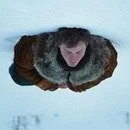
Family festivities in the living room before a tragedy; a woman consumed by an icy landscape; homosexual longing and nostalgia for a unity that never was—these are elements from previous Andrew Haigh films that poignantly recur in A LONG WINTER. Adapted from a Colm Toíbín short story of the same name, the film centers on Mike (Fred Hechinger), the eldest of two in a farming family high in the Colorado Rockies. The views are enchanting, but domestic life is not. Haigh wastes no time revealing the fissures in the family unit: Mike’s brother Tommy (Kit Connor) is heading off to fight in the Korean War, and matriarch Louise (Caitríona Balfe) is suffocated by her hard-ass husband Lester (Ebon Moss-Bachrach), a New York City transplant who seems to have moved to the boonies just to show off his macho bona fides. Haigh and DP André Turpin shoot the home and adjoining farm in deep, threatening shadows pierced by cold light, and often show the family members distorted through dimpled glass windows. Inevitably, a breaking point comes, and Louise disappears without warning amid a blizzard. Her absence compounds the volatility of a household now solely occupied by two disparate types of masculinity: the gruff authoritarianism of Lester and the recessive sensitivity of Mike, who’s awakening to his homosexuality in scenes that astutely highlight his furtive desiring gaze. It’s easy to imagine the early 1950s-set A LONG WINTER as an Elia Kazan or Douglas Sirk melodrama, its masculine agonies and Oedipal drama translated into florid theatrics. But Haigh prefers emotional restraint, and in letting moments play out in relative quiet—whether as big as a search mission in white-out conditions or as small as Mike’s curious glances at the new handsome house assistant, Jimmy—he conveys a sense of placidity curdling into inertia, then into sharp, unspoken discontent. Louise and Tommy got away from it, likely tragically. Mike will still be up there on that frigid mountain, picking at golden memories and idealized dreams the way a vulture chews over a carcass. (2026, 117 min, DCP Digital) [Jonathan Leithold-Patt]
---
Louise Weard’s CASTRATION MOVIE ANTHOLOGY III. JUNIOR GHOSTS—PREMORPHIC DRIFT (Canada)
AMC NEWCITY 14 (1500 N. Clybourn Ave.) — Friday, 1pm
At nine and a half hours into Louise Weard’s CASTRATION MOVIE ANTHOLOGY, we finally learn what became of the “Incel Superman.” When we left Turner Stewart (Noah Baker) at the end of Weard’s first anthology segment, he was plunging himself into the darkness of 4chan, beating up street performers, swimming in alcoholism, and limp with impotence. In the latest installment, CHAPTER III. JUNIOR GHOSTS—PREMORPHIC DRIFT, Weard opens in the immediate aftermath of a fatal stabbing at a support group called Born Angels (a group for grieving parents). Then we settle in with Izzy (Avalon Fast), a women’s crisis hotline operator, and her partner Trent (Henri Gillespi). Weard introduced Izzy and Trent in the first anthology segment as middle school friends of the incel. Chapters converge here when Izzy takes a call from a Born Angels survivor. In the first long, naturalistic take—which Weard is known for—Izzy tries to empathize by revealing that she has also lost someone, referring to Turner. Weard’s choice of using a dead name for the incel character only amplifies the hyperbolic journey of Turner’s transformation, from stubborn repression to a woman-harming misogynist. There’s a question embedded in JUNIOR GHOSTS: what could influence someone to do something horrific? Each entry in Weard’s sprawling, shot-on-Hi8 epic examines rhetoric that shapes behavior, from online misogyny groups to hot dog eating cults to the ideological machinery of gender politics. Here, Trent tells Izzy that she is transitioning and will go by Tiffany. Izzy’s initial frustration is almost understandable: after nine years together, she learns on their actual ninth anniversary that her partner has discussed transitioning with her family before telling her. She may have every right to feel blindsided, but what follows, however, is a slow spiral into hostility. Izzy refuses to respect Tiffany’s name or pronouns and begins reaching for arguments that increasingly resemble anti-trans rhetoric. Fast has the difficult job of making Izzy’s grievances legible without excusing any of the microaggressions and outright verbal abuse that follows. Weard holds us in Izzy’s perspective. Any sympathy for Izzy wanes fast, but for some watching, mileage may vary as Izzy’s resentment curdles. A comparatively compact, standalone chapter in Weard’s anthology, JUNIOR GHOSTS rewards newcomers while gaining resonance from its connections to Volume I, including a return of Michaela and an appearance by Jane Schoenbrun. Weard’s overarching project continues to be an increasingly interconnected examination of gender, alienation, and stories people tell themselves to justify their behavior. In JUNIOR GHOSTS, Tiffany may be the one transitioning, but the scariest form of self-actualization comes in the form of Izzy’s descent into transphobic hate. Weard scheduled to attend. (2026, 127 min, DCP Digital) [Shaun Huhn]
---
Radu Jude’s THE DIARY OF A CHAMBERMAID (France/Romania)
Siskel Film Center — Friday, 3pm
Radu Jude churns out social critique with the highest artistic prowess, an eastern European Godard for our times. Conceived in six weeks, this second-tier adaptation of the classic DIARY OF A CHAMBERMAID follows Gianina, a Romanian immigrant working as a nanny for an upper-class French family in Bordeaux. During her off hours, she acts in a university production of Diary of a Chambermaid and facetimes with her daughter, who lives with her bunică in a rural region of Romania. The film captures the struggles faced by working class immigrants: in one scene, Gianina’s scene partner in the stage production gets deported over a suspicious visa; in another, the French family insists on Gianina standing before their dinner party, presenting a thoughtful take on the Ukraine War from a Romanian perspective. Jude regulars such as Ilinca Manolache breathe comedic life into a film that carries heavy themes in its frames. Much like the young Swiss film critic, the Balkan cineaste continues to deconstruct and reconstruct what cinema can be by weaving moving images from theatrical performance, diaries, fairytales, video calls, and archival fragments. Within each of these modes, the audience sees images of an impoverished, pastoral Romania contrasting the wealth of urban Bordeaux. The audience comes away with its own conclusions as one family carries on their days in pointless intellectual debates about the world while the other longs to be united under the same roof and liberated from debt. Jude stays attuned to the political climate of the EU, the ways technology can expand our definition of cinema, and the voices of victims of western European exploitation. (2026, 94 min, DCP Digital) [Ray Ebarb]
---
Kris Rey’s TRASH MOUNTAIN (US)
AMC NEWCITY 14 (1500 N. Clybourn Ave.) — Friday, 5:15pm
Chicago History Museum — Saturday, 3pm
Kris Rey’s previous feature, I USED TO GO HERE (2020), was about a place I used to go, too: Southern Illinois University in Carbondale, where plenty of Cine-File writers and Chicago creatives spent their college years. All the film-school kids in the early 2000s knew Rey, the guardian of the university’s film equipment. If you wanted to make anything, you had to see her first. Her latest feature, TRASH MOUNTAIN, moves from the longing to return to campus life to the complications of returning home after a parent dies. Both films deal in experiences so familiar, or so close to my own, that I can’t always separate their naturalism from my personal associations. TRASH MOUNTAIN opens with Gavin (Caleb Hearon) emceeing a drag show before joining his friends, including Chicago queen Lucy Stoole, along the waterfront. The skyline is behind them, the evening is going well, and then his sister calls: Dad is dead. Gavin must return to rural Missouri, where a missing Social Security card buried somewhere inside his hoarder father’s house stands between him and getting back to Chicago. If he isn’t accosted by a high school acquaintance in a mock Sam’s Club, he’s being pressured to pray with Pastor Steve (Tim Hopper) or dealing with a government employee named Lucille H. Ball who has never heard of I Love Lucy. For a Chicagoan with a voracious appetite for nightlife, going home feels like slamming on the brakes with both feet. Gavin spends his time with his sister Abbi (Zooey Deschanel), her husband, and their foul-mouthed, melodramatic grandmother (Jacki Weaver, whose comic timing is impeccable). They must clear the house to find the card, settle the estate, and arrange their father’s funeral. When it becomes clear that Gavin won’t be leaving anytime soon, he opens Grindr and finds Jerome (Jaboukie Young-White). What begins as a comedy about grief gradually becomes a hangout film, with Hearon and Deschanel establishing an easy sibling rapport through knowing glances and sardonic barbs. Their father’s death brings little uncomplicated sadness; he was a difficult man, an atheist and gun enthusiast who accepted his son’s sexuality but left plenty of other baggage behind. The funeral arrangements provide some of the film’s sharpest comedy. Pastor Steve, a former cop and priest who now runs a funeral home, explains, “I’ve brought people to justice, I’ve brought people to the Lord, and now I can send them home.” He wears a cowboy hat, struggles to remove it while making the sign of the cross, and attempts to upsell the family on a casket and burial instead of cremation. Grandma wants a church funeral; Gavin and Abbi know their father hated cops and religion. Meanwhile, a growing pile of guns accumulates as they clean the house. “Do you think he bought another gun when he lost one in the house somewhere?” becomes an entirely reasonable question. Written by Hearon and Ruby Caster from experiences surrounding Hearon’s own father’s death, TRASH MOUNTAIN understands grief and gallows humor. Rey avoids the expected cathartic breakdown, finding smaller, less theatrical ways for her characters to feel what they feel. Andy Rydzewski, who also shot FRIENDSHIP, favors largely static compositions, muted Midwestern earth tones, and occasional golden-hour light leaks that leave Gavin looking small against an indifferent landscape. The house’s contents become a record of family history, forcing the siblings to distinguish between what part of that history can be discarded and what deserves to survive. Rey scheduled to attend. (2026, 90 min, DCP Digital) [Shaun Huhn]
---
Corrin Evans’ CORPUS (US)
AMC NEWCITY 14 (1500 N. Clybourn Ave.) — Friday, 10pm and Sunday, 7:30pm
In every friendship group there’s a golden trio: one has the looks, one has the money, and one is great to hang with. Corrin Evans’ ‘90s throwback CORPUS defines the arrangement, then populates it with Sayo (Jeff Wahlberg), Vince (Brodie Townsend), and Ross (Michael Vlamis). Sayo is, as he admits, New York’s most creative coke dealer, photographing the city’s nightlife while supplying anyone who asks with his special K-laced cocaine concoction. His flash photography slows time, images appearing like cross-processed film. Sayo and Ross have been lifelong friends, but Vince, their missing third, hasn’t been around for nine months, too busy modeling and landing the cover of Celluloid magazine. When he stumbles back into their lives, old resentments resurface. Sayo and Vince’s on-again, off-again romance has left both damaged, but their reunion rekindles that spark. Vince soon convinces his friends to join him at a party outside the city, hosted by a renowned photographer. Instead of the familiar horror scenarios of women being led to slaughter by the allure of powerful men, this trio enters the matriarchal domain of controversial artist Billie (co-writer Lily Cowles). The first warning sign, lurking on the grounds of the sprawling gothic manor, is Wren (Nuha Jes Izman), who’s introduced in the 1997 prologue as an inexperienced model forced to pose with a naked man. When Wren reappears bloodied and clutching a decapitated chicken, her former innocence has given way to something bold and feral. Billie’s much older partner, Cata (Ching Valdes-Aran), is equally unimpressed by Ross’s theory of the golden trio. “I’m all three motherfucker!” With no other guests, the celebration of summer solstice begins. Cata describes the holiday’s connections with the Nativity of Saint John the Baptist. Both rituals use bonfires, one to enhance the strength of the sun, the other to Christianize pagan traditions. The party dissolves into absinthe, powder, and increasingly disorienting encounters. When Billie, Cata, and Wren sing to the men, their voices seem to possess the power of sirens. Folk horror becomes one possibility among several threads the story could follow. Evans keeps CORPUS’ motives tantalizingly obscure until its conclusion. Cinematographer Charlie Cole creates dreamy neon nightclubs and captures the uncanny dread of gothic estates like Jean Rollin’s films often do. Sayo’s own photography also becomes part of the film’s visual grammar: each flash fades to a slow-motion captured movement, time slows as Sayo focuses on details, faces, and gestures. The story of Sayo and Vince’s volatile romance unfolds like a ‘90s erotic thriller, constantly oscillating between steamy eroticism, abuse, and renewed seduction. The film’s erotic moments serve the story, feel realistic, and were made in the best of circumstances, as Evans also has a career as intimacy coordinator. Photography, desire, and bodily vulnerability become entangled in a film that borrows from ‘90s queer cinema and retools the erotic thriller. CORPUS wears plenty of masks, from glamorously staged sex to excessive latex and folkloric menace, but at its heart it asks the same question we ask in every relationship, how much of yourself are you willing to freely give to someone you love? Evans scheduled to attend. (2026, 102 min, DCP Digital) [Shaun Huhn]
---
Alain Gomis’ DAO (France/Senegal/Guinea-Bissau)
AMC NEWCITY 14 (1500 N. Clybourn Ave.) — Saturday, 2:15pm and Sunday, 3:45pm
Even at three hours, DAO seems unable to contain itself—it is a film overflowing with love of life. Alain Gomis freely mixes aspects of fiction and nonfiction filmmaking; the movie is alternately a narrative about a 50-year-old woman and her grown daughter, a pseudo-documentary about a wedding in France and a memorial ritual in Guinea-Bissau, and a meta-film about its own making. DAO may defy classification, but it’s never obscure or less than entertaining, likely because it moves like a piece of music. It begins, like Peter Watkins’ unclassifiable epic LA COMMUNE (PARIS 1871), with footage of the filmmaker’s casting process, presenting short interviews with women auditioning for the lead role. Gomis explains, off camera, that the film will have both professional actors and inexperienced performers in the cast, with everyone permitted to draw on their own lives or invent material as they see fit. As he’s setting up the parameters of the film, Gomis edits together interviews (or is it scripted material?) with several middle-aged women about their experiences of being the French-born daughters of African immigrants; through these stories, the main character, Gloria, takes shape. With the lead confirmed, Gomis brings in Gloria’s 20-something daughter Nour and Nour’s fiancé James. (There’s a wonderful montage early on that condenses the process by which the actors playing Nour and James develop their sense of intimacy in rehearsals.) And now, the meat of the film: for the next two and a half hours, DAO alternates between scenes of Nour and James’ wedding in the south of France and the trip that Gloria and Nour take to Gloria’s father’s birthplace in Guinea-Bissau. In this village, the women take part in a different ceremony, the collective commemoration of Gloria’s father two years after his death. That might sound like a dour time, but the memorial turns out to be something of a days-long, village-wide party, with much dancing, drinking, and spirited conversation. There’s really no plot beyond that, yet by moving between the two ceremonies, Gomis generates insights into some considerable topics—the experience of African immigrants in France and how it shaped the experiences of their children and grandchildren; the similarities and differences between family life in Africa and Europe; and the cyclical nature of life in general. While the tone is, for the most part, celebratory, DAO is not without a sad undercurrent. It comes through largely in Gloria’s guarded persona, which hints at a lifetime of having to toughen up against the challenges of being a Black, first-generation Frenchwoman; and the memorial service in Guinea-Bissau is underscored, of course, by a sense of loss. But what is happiness without sadness? In DAO, the joy feels earned, triumphant. (2026, 184 min, DCP Digital) [Ben Sachs]
---
Gabe Klinger’s ISABEL (Brazil/France)
AMC NEWCITY 14 (1500 N. Clybourn Ave.) — Saturday, 2:45pm and Sunday, 12pm
Gabe Klinger’s sophomore narrative feature represents a charming leap of faith, one that mirrors the film’s eponymous protagonist, a struggling sommelier wasting away her ambitions in São Paulo. Looking around at a world that seems to be moving along without her, Isabel (the charisma machine that is Marina Person) imagines a world where the natural wines of Brazil can be appreciated alongside their European counterparts and that her dream of opening up her own wine bar could somehow become a reality. She attempts to court a potential American investor (John Ortiz), who’s enraptured by her devotion to the art of good wine above all else, and as she moves forward with her dream—her new wine bar is charmingly named Os Rejeitados (The Rejects)—her willingness to dive head first into the unknown soon clashes with the realities that come with such a risky business proposition. Aided by vivid 16mm photography and an infectious score by Umberto Smerilli, Klinger paints a vivid character study that isn’t afraid to focus on the painful mistakes that we often make as well as the selfish acts and passionate impulses that make us all human. It’s a terrifying thing to take a chance on yourself, knowing that failure is just around the corner, but sometimes even the very act of betting on what you believe in, even if you end up hitting a dead end, is a noble act. ISABEL is a work with dramatic heft that succeeds in moving with nimble confidence, fully aware that even in the aftermath of failure, there is still so much to give to those around you. Klinger scheduled to attend. (2026, 85 min, DCP Digital) [Ben Kaye]
---
Documentary Shorts: Fault Lines
AMC NEWCITY 14 (1500 N. Clybourn Ave.) — Saturday, 4pm
This exceptional documentary shorts program takes a look at our struggles for mutual understanding. A WOMEN’S PLACE IS EVERYWHERE (2026, 22 min) centers on twin sisters Ona and Emilija, who grew up in Williamsburg and were raised by a single artist mother. The film follows them as they navigate life after their mother’s death and an eviction order that ensues. Mixing still photographs, archival films, and footage that spans years, director Fanny Texier captures sisterhood in its full spectrum: they laugh, cry, fight with each other, and come to terms with losing their childhood home as they fall victim to the inexorable force of gentrification. It’s a celebration of women’s strength and resilience, but also a harrowing swan song for the lifestyle of ‘70s artists’ lofts. Joshua Oppenheimer’s THE REVOLUTION AGAINST DEATH (2026, 23 min) is a revolution around Immortality, the dark star that pulls its zealous martyrs-to-be. This deadpan caricature is composed of vignettes from the RAADfest (Revolution Against Aging and Death Fest): cringy speeches; an elder with Parkinson’s consults a coked-up health coach who smells profit; a couple takes supplement tablets from a few dozen bottles; plus many other odd behaviors that may just be the norms among rich longevity fanatics. Oppenheimer’s efficient film cuts through a cult with a surgeon’s precision and depicts it elegantly with a humanist heart. The clash of images, voiceover, and soundtrack—perfected through anticlimactic cuts that end a vignette abruptly at mid-build-up—is what makes the film so comedic and its irony so crisp and tender. But Oppenheimer extends his sympathy to his subjects too, exemplified by a scene where old ladies discuss their frustration at becoming invisible in the social scenes. There is a stillness that permeates the film, but stillness is one thing that humans seek in vain when it comes to aging. By contrast, the subject in BUCKSKIN (2026, 17 min) faces his own imminent demise with calm and gratitude. He is Carroll B. Williams Jr., nicknamed Buckskin. He is the filmmaker’s grandfather, a Black man with Kiowa lineage, and a forester who has studied trees and reared children. Mars Verrone’s poetic documentary plants a personal story and watches it take root in the discourses of colonialism and racism. They juxtapose oral interviews with their grandpa that are a decade apart, showing his fading memory that loses his Indigenous ancestry. Family photos and 16mm film footage are collaged together, unfolding like an archive thrown open. In the images, symbolism is strong. Against a sublime setting sun, Dylan Thomas is quoted; the 16mm film flares and flares again, as though taking its subject away and into that dying of the light. Elham Ehsas takes a similar bird’s-eye view on familial and national histories in FORGOTTEN SPACEMAN (2026, 16 min), starting with a photograph in which his father, an established reporter, is seen interviewing Abdul Ahad Momand—an Afghan cosmonaut who flew to space on a Soviet space mission. Ehsas puts his father’s story alongside Momand’s. Both men are accomplished in their respective careers, but both had to flee their home country and migrate to foreign soil, with their former glories buried and identities reduced to refugees. Ehsas’ grainy, moiré images trace a resignation shattered into contradictory shards of memory: the celebration of Momand’s return is juxtaposed with the Soviets’ invasion of Afghanistan. What’s left is a dizzying powerlessness, like a lone kite in the sky. Finally, MEMORIES OF A WINDOW (2026, 19 min) is a confession that takes the form of a letter to Shirin Alizadeh—a woman who was killed while driving home during Iran’s 2022 protests. How do we keep protesting without losing our lives to the cause? Chicago filmmakers Mehraneh Salimian and Amin Pakparvar pose a vocational question and practice filming what they see from their windows. These distant videos of various formats, with collated protest videos that circulated online, are presented in diptychs or within a large black frame, as though we, the audience, are seeing them through windows as well. The film ends with a small act that sparks optimism. Even if it isn’t enough to bring down a regime, it draws protesters closer. [Nicky Ni]
---
After Dark Shorts: Siren Songs
AMC NEWCITY 14 (1500 N. Clybourn Ave.) — Saturday, 9:45pm and Sunday, 7pm
The films that make up this horror shorts collection represent a variety of global folktales, both modern and ageless, reflecting universal themes of loss and grief as they traverse both historical and digital spaces. Not surprisingly, these stories all have women at their center who are struggling to come to terms with powers both frightful and enlightening. Peter Vass’ BANSHEE (16 min) is an Irish folk horror set in the 19th century, when rural villagers are trying to make sense of the ceaseless sorrows that befall them. While some credit this bad misfortune to a wandering banshee and a cursed comb, others dismiss this as just the nature of things. With stunning 35mm cinematography, BANSHEE is successfully atmospheric and ambiguous. All the films in this program have interesting uses of color, and that includes Kayla Sólnes’ EMBLA (17 min), an Icelandic folktale about a woodcarver who makes his ideal woman out of timber. When she magically comes to life, he is enthralled, but after one of her fingers is badly burned, she realizes his obsession with perfection might be her end. Dappled with bright primary colors amongst the woodland setting, EMBLA presents a surprisingly empowering tale. Moving into more modern stories, Aida Captijn’s DËMM (17 min) is set in Dakar, Senegal, where Mati, who just lost her mother, is haunted by striking vampiric, soul-sucking women who wander the streets at night, beckoning her to join them. The night sequences are bathed in neon blue light, reminiscent of the ocean waves heard lingering in the background. Another water-based story, RUSALKA (15 min), directed by Oleg Batrakov, Nikita Bulgakov, and Vlad Fisher is a Ukrainian horror containing no spoken word dialogue, instead using its visuals and sound design to highlight a gritty, grounded ambiance. A mermaid-turned-camgirl spins power dynamics on their head, drowning her viewers in a dark, digital void. Hannah Aline’s SCISSORS (12 min) is a candy-colored mini horror comedy where a misogynistic killer (Ethan Embry) realizes he’s in over his head when challenged by a group of lesbians. It’s a playful—if slightly underbaked—take on gender in the slasher genre. Finally, Emily Lawson’s MAN EATING PUSSY (12 min) features a dying man who requests a unique form a sex work: a “birth in reverse.” Constellating sex, birth and death, and containing an impressive use of practical prosthetics, MAN EATING PUSSY hovers between the grotesque and the transcendent, as life so often does. [Megan Fariello]
---
Nicolás Pereda’s EVERYTHING ELSE IS NOISE (Mexico/Germany/Canada)
AMC NEWCITY 14 (1500 N. Clybourn Ave.) — Sunday, 2:30pm
EVERYTHING ELSE IS NOISE opens with a five-minute static shot of the traffic jam from hell. Cars are trapped in gridlock, horns are blaring with an arrhythmic belligerence, and there’s seemingly no end in sight to the sight of automobiles and bicycles intermeshed with one another. It’s a scene that is, in accordance with the rest of the film, equally harrowing and hilarious. Like a great composer, Nicolás Pereda finds glee in playing with alternating dynamics within a scene, here constructing a feature-length scenario where a documentary team’s attempts to interview a trio of female composers keep getting interrupted by power outages, barking dogs, and beleaguered neighbors. There’s a droll tone underlying the almost sitcom-level hijinks besetting the filmmakers, though they eventually are able to capture the three cellists on film, each given separate moments to expound upon their craft and what it has meant to pursue their passions within an otherwise male-dominated industry. The underlying chaos of the film—alongside Pereda’s casual sense of framing and blocking—helps to cut the tension of what could otherwise be read as a distressing tale of working artists just trying to make a living amidst less-than-ideal circumstances. After a long, winding day, though, EVERYTHING ELSE IS NOISE ends by reminding us that sometimes, in the darkest, most frustrating moments of our lives, all you can do is laugh. (2026, 71 min, DCP Digital) [Ben Kaye]
---
For more information, including a complete schedule and list of guests attending, visit the festival website here.
📽️ CRUCIAL VIEWING
Eyeworks Showcase of Experimental Animation
Block Cinema (at Northwestern University) — Sunday, 12pm (Program I) and 2:30pm (Program II) [Free Admission]
Program I
Forget generative AI. Support generative animation. All art is generated by those making it, but Canadian animator Winston Hacking’s ACTION BOG (2026, 2 min) seemingly moves at the speed of generative AI, with each iteration of Hacking’s evolving vision taking shape almost instantaneously. What inspires awe, though, is the extraordinary amount of human effort behind these seemingly effortless transformations, achieved largely through the manipulation of polymer clay and the incorporation of other collaged materials. The result is mesmerizing, moving at the speed of thought—the accompanying score from Andrew Zukerman acts like a series of onomatopoeias, giving further dimension to the tactility of the materials. The star of late British animator Emma Calder’s SPRINGFIELD (1986, 7 min) is a cat-obsessed woman who has a vacuum cleaner where her feet should be; she also likes to play bingo. The rough-hewn animation style, which gives the film a whimsically gritty look, as if it were drawn with dirty colored pencils, befits its themes of loss and alienation, as described in the program notes. Japanese animator Chihiro Yamanaka’s VEILS OF LANDSCAPE (2025, 5 min) is a feast for the eyes, with colorful, impressionistic swatches against a dark background alternating with lighter passages that resemble watercolors on white paper. The imagery moves in concert with the accompanying symphonic music, giving the animation the quality of a dance in which image and sound seem to respond to one another. The verdant logic of Jacques Boyceau de la Baraudière’s 1638 garden design manual, Traité du jardinage, is reimagined in Nigerian-Canadian filmmaker Adebukola Bodunrin’s LEAKS IN THE LINES (2026, 4 min), created using laser-etched 16mm leader and footage shot in gardens. The film juxtaposes the natural beauty of its ethereal footage of Parisian gardens with the deliberately artificial effect of the laser etchings, expressing both literally, through etched words, and symbolically, through the collision of these images, the inherent tension between the organic and the constructed. There isn’t an overarching theme to Eyeworks programs that aren't centered around a specific animator, but certain motifs nevertheless recur; flowers, by way of Georgia O’Keeffe, are the sole motif of JoAnn Gillerman’s ORCHID (1985, 3 min). The O’Keeffe influence is evident in the use of flowers to suggest sexuality, though here that sexuality is more androgynous, with computer-animated flowers and images of naked men playing their respective parts. Images swipe onto the screen in sections, combining and recombining into kaleidoscopic compositions. I think the software in Amy Heckerling’s CLUELESS that enabled Cher to assemble outfits on her computer was animated, so it seems appropriate that I experienced a similar longing for an imaginary convenience while watching Shana Moulton’s THE UNDISCOVERED DRAWER (2013, 9 min), in which Moulton’s alter ego Cynthia searches for a key among the drawers in her magical room. There’s space for all kinds of knickknacks in Moulton’s world, and as someone with just as many pill organizers and face rollers, I could certainly use some of those magical drawers that beget even more drawers. The production design is immaculate throughout, and Moulton’s candy-colored creativity is enough to excuse the use of a Coldplay song to unlock yet another compartment. Music is more elegantly utilized in Sara Petty’s PRELUDES IN MAGICAL TIME (1987, 4 min), whose imagery, as one source puts it, “alludes to a window and curtains dancing in a breeze.” These recognizable forms emerge intermittently before giving way to more abstract shapes, their movements accompanied by the forlorn sounds of a violin. The oldest film in the program, ART’S INFANCY (1910, 4 min), was made by Émile Cohl, a French caricaturist associated with the Incoherent Movement and best known as the Father of the Animated Cartoon. According to the official description, it was made before the advent of cel animation and “blended techniques of hand-drawn linework, paper cut-outs, trick photography, human pixilation, and mixed-media live-action.” The resulting assortment of visual tricks is silly and senseless, but its inventiveness is unmistakable, especially considering how early it came in the history of animation. I love eyes, so I’m perhaps unfairly biased toward Turkish animator Çağıl Harmandar’s VISION (2023, 7 min), composed of fast-moving, line-drawn animation in which the figure of an eye repeatedly emerges, taking on different forms amid the constantly shifting imagery. An eye also figures prominently in Polish animator Julian Antonisz’s WHAT DO WE SEE AFTER CLOSING OUR EYES AND COVERING OUR EARS (1985, 5 min). It was made using Antonisz’s invention, the “pantograf animograf,” which enabled cameraless animation by allowing the artist to draw on an ordinary sheet of paper while the machine transferred the drawing directly onto film stock. (You can see an example of it in use here.) The resulting drawings have a childlike simplicity that belies the sophistication of the technique used to produce them—an apparent artlessness that is, in fact, part of their charm. Australian animator Ruth Peyser’s bold style is on display in GO TO HELL (1994, 8 min), in which a woman with a dog’s snout experiences a series of hellish (pun intended) scenarios that transform her fear into anger and, ultimately, a source of strength. The film was partly inspired by Peyser’s rage over the Clarence Thomas–Anita Hill hearings, a frustration that will undoubtedly resonate with many viewers. By contrast, both in content and form, Kevin Eskew’s ENSMOOTHENING (2026, 12 min) is sleek where Peyser’s film is appropriately and admirably rough, using decisive lines, bright colors, and a soundtrack reminiscent of The Jetsons to envision a deceptive utopia whose polished surfaces conceal the machinations beneath. [Kat Sachs]
---
Program II
Program II is composed of fairly bizarre animations and, for this reason, is worth seeing if you are in the mood. The first film sets a tone that the rest of the program diverges from. FAREWELL, LITTLE ISLAND (1987, 13 min) follows conventional storytelling and is a colorful rendition of the harrowing prices we have to pay for “progress.” A small island village, in the middle of a wide river blocked by a dam under construction, has a community of people and animals as vibrant as the palette that depicts them. Sándor Reisenbüchler’s folk art-inspired illustrations are so stylish that even destruction looks beautiful. Onward, the program tips into a psychedelic trip. RAPID EYE MOVEMENTS (1977, 11 min) is as enigmatic and moody as it is timeless. An early work by Jeff Carpenter & Mary Lambert, when Lambert was still a student at RISD, this 16mm cel animation loosely follows a guy through his nightlife, unfolding into roulette, drinks, phone calls, and sex. Voices drift in and out, as though a composite of conversation fragments whispered in the ears. The airbrushed images, some from rotoscoped live action, show figures shapeshifting between light and shadow, willowy as though they were on the verge of melting. Fast-moving but equally hypnotizing is Alexandre Alagôa’s XYZ (2026, 12 min), a black-and-white stop-motion animation that marries flicker and the backroom. Not to mention its score, which sounds like a choir of high-pitched noise. Receding in a hallway and moving outward through a window into an otherworldly dimension and back, the camera creates an illusion of a stroboscopic journey stumbling through a sterile concrete jungle. Lewis Klahr’s ALTAIR (1995, 7 min) reimagines Hollywood film noir by pairing stop-motion magazine collages with anxiety-inducing strings of Stravinsky’s “Firebird.” There isn’t a clear storyline—or it’s what you make of it—but plenty of vibes and play. Set against a jazzy, chill soundtrack, Caibei Cai’s stop-motion SILVER CAVE (2022, 15 min) is animated through embossed metal sheets. Shiny lines move fluidly. We follow some paw prints to discover broken mirrors and fossil stones. Punctured by images of the animator's hands and the camera's own reflection, and following the voiceover that has a mixture of poetry and instructions such as “next frame,” SILVER CAVE is quite meta: it incorporates its own making and depicts it like a sleight of hand. Ida Lasic’s black-and-white, computer-animated MOLLY DANE (2020, 6 min) has no dialogue, but it tells a haunting story that I suppose is about negligence and death through Lego-like, low-poly stick figures that float through hotel lobby jazz and discordant tunes. It’s vague and strange, similar to work by Barry Doupé, but only choppier and harder to follow. The program ends on a most atmospheric note with Amy Kravitz’s RIVER LETHE (1985, 7 min). Kravitz’s graphite drawings are rubbed to a blur, and when put in a series, create ethereal and gauzy visual movements akin to undulating waves and dancing water spirits. Its droney, ambient soundtrack is soothing, seductive, and adds dreaminess to the work. Also in the program is TAKO TSUBO (2024, 6 min) by Fanny Sorgo and Eva Pedroza. [Nicky Ni]
---
With festival curators Alexander Stewart and Lilli Carré in person.
Jerry Lewis' THE LADIES MAN (US)
Film Studies Center (at the University of Chicago) — Friday, 7pm [Free Admission]
I don’t think it’s still permissible to discuss the work of comedian and filmmaker Jerry Lewis without acknowledging Lewis’ off-camera history of sexual predation. So, without getting into the details of that history—which was recounted at length in a February 2022 Vanity Fair exposé—let it be said that Lewis was inarguably a monster who abused his celebrity status to dehumanize numerous women, including several of his costars. Each spectator is free to act on this knowledge as they will. For some, it may provide reason never to watch or discuss Lewis’ work again; for others, it may necessitate trying to separate the art from the artist and approach Lewis’ contributions to film comedy on formal terms alone. Yet a third position exists between these opposing views—that is, we may continue to learn from Lewis’ films because of what they tell us, inadvertently or not, about comedy, celebrity, and male privilege. In THE LADIES MAN (the very title seems sinister now), Lewis plays Herbert Heebert, a variation on the infantile, maladroit comic persona he perfected during his ten-year partnership with Dean Martin. Lewis was in his mid-30s when he cowrote, directed, and starred in the film, and he had been one of the biggest stars in the world for more than a decade. In contrast, Herbert is a nobody in his early 20s who’s been afraid of women since his fiancée jilted him at the altar; the central gag of the movie is that he winds up as the live-in servant at a boarding house for dozens of young women. As is often the case in the movies Lewis directed, THE LADIES MAN isn’t concerned with story so much as with creating a framework for comic set pieces that often play on the fact that what we’re watching is a movie and therefore not real. Lewis’ facility with filmmaking conventions is remarkable; the scenarios “work” as jokes (whether they’re genuinely funny will forever be subject to debate) and also function as commentaries on the plasticity of the cinematic form. It’s no wonder that Lewis titled his book on cinema The Total Filmmaker—what he innovated was a uniquely serious approach to movie comedy. Yet one can’t neglect the notions of control inherent in that title, along with the dangerous attending myth that with “total” artistry comes the total power to do whatever one wants. This myth receives one of its most classic invocations in the final shot of THE LADIES MAN (a major reference point for Godard and Gorin’s TOUT VA BIEN [1972] and Wes Anderson’s THE LIFE AQUATIC WITH STEVE ZISSOU [2004]), in which the camera pulls back to reveal that all the action has occurred on a set with no fourth wall. What once seemed like a celebration of artifice now seems like a chilling confession: Of course Lewis regarded the world of a film as a giant dollhouse, as he regarded the people in it as his personal playthings. Surely, this worldview was nurtured and long excused by Lewis’ celebrity (as is the case with many high-profile abusers), but I wonder if it was also nurtured and excused by his distinctive comic persona. Lewis could get away with anything in his pictures (wrecking a set, making a buffoon out of a stuffed-shirt, etc.) because he acted like an innocent little boy; his sweet-natured character was also terminally intimidated by other people in general and women in particular, thus deflecting any sense of aggression away from himself. Lewis’ films often feel like fairy tales because they involve the Lewis character getting everything he wants; in THE LADIES MAN, Herbert overcomes his fears, hangs out with movie stars like George Raft, and gets to escape to a world of fantasy with a mere cut to another scene. What an apt metaphor for a man who thought himself entitled to a life of impunity. (1961, 95 min, 35mm) [Ben Sachs]
Tsai Ming-liang's THE HOLE (Taiwan/France)
Doc Films (at the University of Chicago) — Saturday, 7pm
In the midst of the pandemic, Tsai Ming-liang’s THE HOLE resurfaced as opportune viewing because of its being about a mysterious virus plaguing Taiwan on the brink of the new millennium (the film itself was originally conceived for a French TV anthology about that historical precipice—another apocalyptic instance, though with more forewarning); incidentally one of the main characters also hoards toilet paper, the quirk du jour of 2020. In the context of the film, as throughout Tsai's oeuvre, this is a kind of strange behavior that makes sense only to the person doing it. What was humorously absurd soon became a reality during our real-life pandemic, suggesting the ways that the odder details of Tsai’s films, outside of themes like loneliness and isolation, are bizarrely relatable. But those larger themes are prominently on display here as well: Tsai stalwart Lee Kang-sheng plays a young man living alone in a dilapidated Taipei high-rise, in which he also runs a small grocery store. Toward the beginning of the film, a plumber comes to assess a leak and drills a small hole in the floor that doesn't get filled, an incident Tsai himself experienced and which inspired the film. The female occupant below (Yang Kuei-mei) is understandably frustrated, and the two enter into a screwball-esque battle of wills as the virus rages on around them and they remain in the building, defiant of orders to evacuate. Intermittently there are sequences wherein Yang Kuei-mei performs musical numbers dressed as and lip-synching to Grace Chang, a Hong Kong actress and singer. (After the credits there is an intertitle that declares, “In the year 2000, we are grateful that we still have Grace Chang’s songs to comfort us.” Chang is of especial importance to Tsai.) These tuneful respites are unusual amidst Tsai’s oeuvre, then and now, but what they mean is just as opaque as any other of his enduring motifs that suggest rather than explicate. For example, as is often the case in Tsai’s films, water is a constant; those, like the protagonists, who do not evacuate the affected areas will lose access to their water supply when it’s shut off on January 1, 2000. Outside, however, rain pours down torrentially, presumably a factor in what drives cockroaches, the plague’s vector, further into peoples’ homes. It’s the insects that people start acting like once they’ve caught the disease—this accounts for some of the film’s physicality, as well as the hole itself, which is both a metaphor for the looming cataclysm and more literally the primary source of communication between the man and woman. That such an intrusion facilitates their connection is evocative of the premise; the cure to loneliness might just be something like a virus itself. Screening as part of the New Releases and Restorations series. (1998, 89 min, 35mm) [Kat Sachs]
F.W. Murnau's FAUST (Germany/Silent)
Music Box Theatre — Monday, 7pm
The last film F.W. Murnau made in Germany before emigrating to Hollywood is surely his most Germanic, an adaptation of one of the most famous tales in his nation’s history. At the center of it is Emil Jannings’ astonishing performance as Mephisto, a collection of outsize gestures and facial expressions that convey the full extent of the demon’s malign power. Indeed, Jannings’ work may be the most expressionistic part of FAUST outside of the brilliant special effects, which incorporate miniatures, superimpositions, and stark lighting to convey a world in the grip of supernatural forces. (Per Jonathan Rosenbaum, “Like Kubrick’s 2001: A SPACE ODYSSEY, this… integrates its dazzling special effects so seamlessly that they’re indistinguishable from the film’s narrative, poetry, and, above all, metaphysics.”) The sets and costumes, however beautiful, are more naturalistic than those of Murnau’s NOSFERATU (1922) and THE LAST LAUGH (1924), and they provide a baseline of realism that makes the effects stand out even more. It all but goes without saying that Murnau was the most imaginative director of the silent era, and the supreme pleasure of his FAUST lies in watching his imagination run wild. The shots of a gigantic Jannings looming over the town where Faust lives mark just one unforgettable example of the filmmaker’s artistry, yet every scene inspires wonder; some other standouts include the lavish Italian wedding that Mephisto takes Faust to attend, the architectural shots of crowds fleeing a town square at the outbreak of a plague, and the sequences set in the heavens, where Mephisto and an archangel stand flanked by enormous wings. These overwhelming images render towering the film’s essential conflict between good and evil. With live musical accompaniment by the Invincible Czars. Screening as part of Music Box of Horrors: The Final Chapter. (1926, 107 min, DCP Digital) [Ben Sachs]
Jacques Rivette's CÉLINE AND JULIE GO BOATING (France)
Doc Films (at the University of Chicago) — Friday, 7pm
In 2012, the critic Miriam Bale coined the phrase “persona-swap film” to describe a previously unacknowledged genre, one that stretches from Howard Hawks’ GENTLEMEN PREFER BLONDES in 1953 through David Lynch’s MULHOLLAND DRIVE half a century later. She cites Jacques Rivette’s 1974 masterpiece CELINE AND JULIE GO BOATING as an essential entry in this unique cycle of movies that focuses on the female experience by examining how two friends with contrasting personalities—one eccentric, the other more conventional—either swap or magically merge identities. The publication of Bale’s essay coincided with the rehabilitation of Rivette’s reputation when a number of his major films that were previously difficult to see started to become more widely available in the wake of his 2009 retirement. CELINE AND JULIE GO BOATING, the most accessible film from Rivette’s greatest period (1969-1976), is only now receiving its long-awaited streaming debut in America, having never been released on DVD or Blu-ray in this country. (This, by itself, is a good reason to subscribe to the Criterion Channel.) Based on a 2017 restoration of the original 16mm elements by France’s Centre National du Cinéma, the movie’s colors are now tighter than ever, while the plentiful grain within its Academy aspect ratio is beautifully preserved—at times giving the image the quality of a pointillist painting. But the irresistible central performances—by two actresses with pointedly contrasting styles (the theatrically trained Dominique Labourier as Celine and the natural-born movie star Juliet Berto as Julie)—have always been and still are the main draw. Berto and Labourier, who also co-wrote, have admitted to consciously drawing on Bergman’s PERSONA for inspiration (while Rivette, more typically, was thinking of Hawks) as they created the scenario of a magician befriending a librarian and, with the aid of a psychotropic hard candy, entering into a “house of fiction.” This location is a literal Parisian mansion inside of which the same 19th-century mystery story (involving a love triangle and the murder of a young girl) plays out each time the women pay it a visit. Eduardo de Gregorio, Rivette’s regular co-writer during this period, apparently scripted these “film-within-a-film” scenes based on two stories by Henry James. The way Celine and Julie start out as passive spectators of the Jamesian mystery but gradually become active participants in its plot underscores the most intellectually provocative aspect of this otherwise supremely playful opus: A lot of filmmakers have made great movies about the process of making movies—but only Rivette made a great one about the process of watching them. The result is one rabbit hole I am happy to go down again and again. Screening as part of the Behind the Mask: Femininity as Fabrication, Performance, and Identity Crisis series. (1974, 194 min, DCP Digital) [Michael Glover Smith]
Ritwik Ghatak’s THE CLOUD-CAPPED STAR (India)
Doc Films (at the University of Chicago) — Wednesday, 7pm
In its focus on the unhappiness and self-sacrifice of its heroine, THE CLOUD-CAPPED STAR bears resemblance to a number of films by Kenji Mizoguchi, arguably the cinema’s greatest chronicler of female suffering. It also warrants comparison with Luchino Visconti’s ROCCO AND HIS BROTHERS, which was made the same year, in that it’s an operatic drama about a working-poor family living at a critical moment in their nation’s history. Like either of those points of reference, THE CLOUD-CAPPED STAR has won legions of admirers—it wasn’t just a commercial success, but the only box office hit of director Ritwik Ghatak’s career—and for decades it’s been recognized as one of the greatest Indian films. Its significance stems from how Ghatak confronts what critic Ira Bhaskar, writing for the Criterion Collection, has called “the irreparable despair and psychological unhinging that the 1947 Partition of the Indian subcontinent into the nations of India and Pakistan brought about in the people who experienced it.” Employing an expressionistic film style and melodramatic plotting, Ghatak conveys the Partition in emotional terms, making the agony of many seem personal and relatable. The film takes place in a refugee colony in what used to be East Bengal but is now East Pakistan; the story centers on Neeta (Supriya Choudhury), a dutiful young woman who’s forced to support her parents and three siblings after her father is injured in an accident. Her older brother, Shankar (Anil Chatterjee), is training to be a professional singer and refuses to work (which earns him the mockery of his neighbors), while her younger siblings are still in school. Neeta takes on more and more responsibility in order to provide for her family, turning her back on a loving fiancé because she’s always too consumed with work to get married. The heartbreaking irony of the film is that Neeta degrades herself in her willingness to do anything to preserve the dignity of the people she loves, though just as moving is Shankar’s determination to succeed in his art despite the shaming he receives from people around him. The scenes between these two characters form the heart of THE CLOUD-CAPPED STAR. Each one recognizes that they’ve alienated themselves from the people closest to them but can’t stop acting as they do. Shankar’s melancholy songs give beautiful expression to the characters’ frustration and emotional pain; they also add to the film’s musical sense of fluidity. Screening as part of the Mapping Melodrama series. (1960, 127 min, DCP Digital) [Ben Sachs]
📽️ ALSO RECOMMENDED
Paweł Pawlikowski’s FATHERLAND (Poland/Germany/Italy/France)
Music Box Theatre — Wednesday, 5pm and 7pm [SOLD OUT]
Having read Colm Tobin’s novel about the twilight years of Thomas Mann, Paweł Pawlikowski became fascinated with a small excerpt about Mann’s return to Germany after sixteen years in exile. The Polish director took liberty with historical events, replacing certain family members with others (for instance, Mann’s daughter Erika stands in for his wife) and altering the chronology with regard to his son Klaus’ suicide and his encounters with actor Gustaf Gründgens (who was Erika’s ex-lover and a friend to Hermann Görring). FATHERLAND is a five-day road movie where Germany’s greatest author tours a chaotic postwar landscape of apprehensive Marxists and defeated fascists. Location scouting for the film took five months solely to find German architecture within Poland’s borders. Sandra Hüller gives a rich performance as Erika; portraying the great writer, Hanns Zischler conjures the ghost of Thomas Mann as a human and great intellectual. The director considers the film a part of a trilogy, after IDA (2013) and COLD WAR (2018). Each film explores identity beyond national borders in a jumbled world of postwar Europe. FATHERLAND stands apart from the other films through its intellectual exploration of mise-en-scene. Mann, while quoted as saying, “Wherever I am, there is Germany”, struggled with his own ideas of the nature of home. It’s presumed that one of the contributing factors for Klaus’ suicide came from not knowing who to write for and in what language—struggling to embrace his German or American identity—all while standing the shadow of his father. As a former conservative (who famously defended Germany in WWI through Reflections of a Nonpolitical Man), Mann became firm against the Third Reich. Art does not recognize borders—even Johann Wolfgang Von Goethe’s art precedes the German state. Pawlikowski in person for a post0screening discussion after the 5pm show and to introduce the 7:30pm show, both of which are sold out. (2026, 82 min, DCP Digital) [Ray Ebarb]
Jane Schoenbrun's WE'RE ALL GOING TO THE WORLD'S FAIR (US)
Siskel Film Center — Wednesday, 6:30pm [SOLD OUT]
Back in 2022, it seemed we were finally shedding some well-worn tropes about how to depict the internet on film. At a stage when webcam horror has been played out for a number of years (and considering there are only so many ways to dramatize message notifications), how does a filmmaker hope to capture the omnipresent role of the internet in our lives without resorting to the usual cliches? Enter Jane Schoenbrun’s WE'RE ALL GOING TO THE WORLD'S FAIR. Schoenbrun has been a mainstay of independent film for the last 6 years, heading up projects like the experimental TV show The Eyeslicer and dreamy anthology COLLECTIVE: UNCONSCIOUS (2016) and also lending their talents as a producer to indie oddities like CHAINED FOR LIFE (2018) and TUX AND FANNY (2019). WORLD'S FAIR, their debut feature, continues Schoenbrun’s creative hot streak by flipping the script on internet horror, exploring the ups and downs of the digital world in all of its mess. Newcomer Anna Cobb anchors the film as Casey, a lonely teenager who spends most of her free time (and much of the film’s runtime) running a small YouTube channel. In the opening scene, Casey begins the "World’s Fair Challenge," where the participants repeat "I want to go to the world’s fair" on camera several times à la CANDYMAN, wipe a bit of their blood on their monitor, and wait for strange things to start happening to them. It’s clear that Casey is seeking a sense of community by participating in the post-capitalist hellscape of the internet, where self-expression is rewarded mostly by how well one fits themselves into established memes on established platforms. Casey’s view counts suggest she has been shouting into the void for a while now, which is taking its toll on her mental health and setting her up to be a living creepypasta. The film doesn't repeat the usual “Is this real or inside my head?” question; both possibilities are equally scary, since most of the depersonalization that Casey describes is consistent with severe depression. Whether or not the supernatural elements come to bear, someone still develops a double-consciousness about their problems, coping with the difficulties of life by turning them into objects of horror. The approach is a sort-of corrective for the preponderance of trauma-plot horror films—here is a character who exists in our world, where trauma can sell quite well if you know how to package it. Schoenbrun’s skills as a director are numerous, but maybe the most significant derives from their experience as a producer. Their penchant for editing anthologies comes to bear on the fake viral video collages that break up Casey’s increasingly disturbing video diaries, with material coming from a diverse list of collaborators that includes filmmakers Theo Anthony and Albert Birney as well as ASMR artist Slight Sounds. While the variety of approaches to the subject is refreshing on its own, Schoenbrun’s editing rhythms heighten the material, expertly re-creating the real-life discomfort of seeing a timeline where shitposts and footage of war crimes pop up back-to-back. Perhaps more important is Schoenbrun’s empathy towards Casey, a young and confused woman with a codependent relationship with the internet. Eschewing moralistic didacticism, Schoenbrun lets the conflicts play out ambiguously, particularly when an anonymous older man begins contacting Casey about her videos. On the one hand, any grown man reaching out to a teenager online should send up immediate red flags. On the other, he seems to be the only one actually concerned about Casey’s health. Will the internet be Casey’s savior or downfall? Schoenbrun asks, why not both? In partnership with Women & Children First, the Film Center celebrates the release of filmmaker Jane Schoenbrun's debut book, Public Access Afterworld, with a special screening of WE'RE ALL GOING TO THE WORLD'S FAIR. The evening includes a pre-screening conversation with Schoenbrun moderated by film critic Sam Bodrojan, with every ticket including a pre-signed copy. (2021, 86 min, DCP Digital) [Maxwell Courtright]
Terence Fisher’s HORROR OF DRACULA (UK)
Music Box Theatre — Wednesday, 6pm
Hammer Films didn't reinvent Dracula, but their gamble paid off for two reasons: color and blood. Universal's monsters had become nostalgic icons and parodies showing up in ABBOT & COSTELLO MEET FRANKENSTEIN. Terence Fisher recognized that Gothic horror needed to up the ante. Fisher also helmed THE CURSE OF FRANKENSTEIN the year before HORROR OF DRACULA, which became known as Britain’s first blood and guts film in color. It is difficult to imagine that after the release of CURSE, Fisher had to return to a day job directing episodes of The Mickey Mouse Club. Hammer wasn’t enthusiastic about obtaining Dracula when Universal refused to co-finance another Gothic horror update, but pressed on and independently secured the rights along with an 80-page legal contract enforced by Universal. The whole thing almost fell apart when Jimmy Sangster's screenplay was criticized for being too violent and too sexual. The opening sequence announces an updated version of the beloved Universal classic. Against a monochromatic tomb that bears Dracula’s name, over-saturated blood splatters and desecrates the grave. Terence Fisher immediately announces that his monsters won’t be hiding behind expressionistic shadows, they’ll pop out of the screen with bleeding teeth and iris scratching contacts in brilliant color. Fisher understood that frightening monsters reflect contemporary anxieties, and postwar Britain was shedding its Victorian restraint. More than any Hammer production, HORROR OF DRACULA belongs to Fisher. After spending two decades as a film editor, he developed an economical style that favored clean compositions and elegance. Production designer Bernard Robinson replaced Universal's cobwebbed Gothic with detailed manor houses and polished interiors. Cinematographer Jack Asher flooded every frame with saturated reds and emerald greens—burning in as much color as technicolor’s three-strip process could take. Sir Christopher Lee and Peter Cushing complete the transformation. Lee's Dracula abandons Lugosi's theatrical swagger for something towering, physical, soft-spoken, and impossibly handsome. He projects an unbearable restraint that ultimately bursts the moment his instincts take over. Lee reportedly viewed Dracula as an impossibly lonely creature who’s not afraid of death and only lives on because the chance to die has yet to arrive. His screen time is remarkably brief but casts a large shadow over horror cinema. Opposite him, Peter Cushing reinvents Van Helsing. He’s not an elderly professor lecturing about folklore; instead, he’s in the trenches and studying fringe science. Cushing attacks problems with precision, confidence, and relentless momentum. Watching what he does with his hands is hypnotic. Every prop becomes a tool, every gesture reveals thought, every movement convinces us he has performed these rituals dozens of times before whether he’s resurrecting the dead or staking a vampire. (Tom Holland’s FRIGHT NIGHT [1985] incorporates a lot of elements from HORROR OF DRACULA, including crosses burning flesh, sunlight vampire dust, erotic vampire lust, and Peter Vincent—Roddy McDowall’s amalgam character Peter Cushing and Vincent Price.) It was Sangster’s script that aided most in Cushing’s naturalistic performance as much of Dracula’s supernatural mythology is dismissed. This version of Dracula is not a shape-shifter; his lust for blood is more akin to a drug addiction. The Count also becomes more grounded due to the pseudo-science of Van Helsing. It also doesn’t hurt that Sir Christopher Lee is sexy as Dracula. All of his victims seem to surrender to something they've been denied. A look of sexual exhaustion after being drained by the Count comes across clear. HORROR OF DRACULA transformed Hammer from an ambitious British studio into horror's defining name, but its greater achievement is proving that every generation deserves its own monsters. Fisher didn't replace the Universal classics. He reminded audiences that the Gothic survives by evolving. In the years since, there have been countless Counts in and out of capes, each offering their variation of Stoker’s character. From Max Schreck to Caleb Landry Jones, but few will genuinely instill fear as Lee’s Dracula does the first time you see him flash his long-toothed smile. Screening as part of Music Box of Horrors: The Final Chapter. (1958, 82 min, DCP Digital) [Shaun Huhn]
Abbas Kiarostami's CERTIFIED COPY (France/Italy/Belgium/Iran)
Doc Films (at the University of Chicago) — Thursday, 7pm
CERTIFIED COPY was Abbas Kiarostami's first narrative feature after a decade of video experiments and it was also his first feature shot in Europe. These facts alone would deem the film a major work, but it's a milestone for Kiarostami regardless. The premise is teasingly simple, in the grand tradition of THE TRAVELLER and TASTE OF CHERRY: A British art historian (William Shimell) has written a book on the history of forgery. In it, he posits that it's irrelevant whether great art is authentic or merely copied because it's the impact of the work that determines its legacy. After giving a lecture in Tuscany, he meets a beautiful antiques dealer (Juliette Binoche) who likes the book but disagrees with its argument. They hit it off anyway and then decide to spend the afternoon together, visiting historic sites and bickering about art. This promises, and essentially delivers, a genteel conversation piece in the Eric Rohmer mold; but in its particulars, the film is every bit as weird as Kiarostami's prior masterpieces. Much of the dialogue feels improvised or tossed-off, though the characters are often filmed in a manner that suggests cosmic significance: They're isolated in symmetrical, icon-making close-ups; reverently followed in tracking shots that emphasize the fragility of any moment in the course of time; and (Kiarostami's calling card) made into specks in landscape shots that identify them only by the car they're riding in. At different points of their afternoon, this man and woman behave like strangers, a long-married couple, and smitten kids on a first date. Which of these interactions is real? Does it matter? Nearly every scene of CERTIFIED COPY touches on some profound aspect of human experience—falling in love, realizing one's place in the universe, et cetera—and in each of their incarnations, the characters are so fully realized by the leads that they never seem ciphers for bigger themes. (Binoche won the Best Actress prize at Cannes for her performance, which contains some of her most attenuated and unpredictable work; Shimell, an opera singer in his major first film role, is a more limited actor by comparison, but he makes a fine Cary Grant to her Katherine Hepburn.) Their entire experience, in short, has been recast by their passion for art: Everything is mysterious and full of promise. Some critics writing about the film have invoked Henry James in describing this tale about the enticements of the Continent, but the results have less in common with, say, The Ambassadors than with James' inexplicable freak-out The Sacred Fount. Who would have expected this great artist of open spaces to take after the most psychoanalytical of writers? Only the film's aftertaste is truly shocking: Kiarostami has arrived at these Jamesian conclusions through entirely his own means. The film applies to psychology the same coy, unassuming perspective that Kiarostami directed at landscapes and faces, respectively, in FIVE (2005) and SHIRIN (2008). Remarkably, the project remains the same: to regard the subject as if it's never been contemplated before. That CERTIFIED COPY maintains such a light surface tone while pursuing such meaningful questions makes most other recent filmmaking seem trivial or overwrought. Screening as part of the Heteroglossia: Languages and Translation series. (2010, 106 min, DCP Digital) [Ben Sachs]
Adam McKay’s STEP BROTHERS (US)
The Davis Theater — Monday, 7pm
Before any actors appear onscreen in Adam McKay’s STEP BROTHERS, before the collapsing bunk beds, the insatiable Kathryn Hahn, the night-vision goggles, and all the other chaos, we open with an onscreen quotation from former President George W. Bush: “Families is where our nation finds hope, where wings take dream.” It’s a line whose mix of garbled grammatical inconsistencies and crude, sophomoric attempts at poetry perfectly sets the scene for what still remains one of the 21st century’s most artistically successful paeans to male friendship, in all its stupid glory. Following the successes of generation-defining, nobly-titled comedies like ANCHORMAN: THE LEGEND OF RON BURGUNDY (2004) and TALLADEGA NIGHTS: THE BALLAD OF RICKY BOBBY (2006), former Saturday Night Live head writer Adam McKay pivoted to more dramatic fare like THE BIG SHORT (2015) and VICE (2018), films that proudly wore their politics and didacticism on their sleeves, turning subtext into foghorn-level text. A shame, since STEP BROTHERS stands high above McKay’s later works as a text brimming with commentary on all the more serious topics he would attempt to tackle in his later works; yes, VICE contains literal members of the Bush Cabinet, but nothing is more evocative of Dubya’s belligerence and selfish ego than Ferrell and Reilly fighting over a drum set. Perhaps THE BIG SHORT delves into the more specific nature of our current American financial crisis, but do any of the characters in that film truly embody what it means to be a tragic capitalist dweeb like Adam Scott’s Derek Huff? Most impressively, even with the rampant on-the-nose fourth-wall breaking devices spliced throughout his later efforts, STEP BROTHERS—aided by a plucky score from Jon Brion—finds a way of toeing the line between mundane domestic environments and bizarre and outlandish set pieces, all culminating in a grand finale that gracefully meshes together a cover band devoted to strictly ‘80s Billy Joel music, an impromptu performance of ”Por ti volaré,” a motivational speech from Richard Jenkins about his abandoned dreams of becoming a dinosaur, and various fantasy sequences involving centaurs and lumberjacks. It’s altogether stupid, profound, and inexplicably, the most rewarding work of social commentary in McKay’s oeuvre. Followed by a discussion with Matt Singer, author of Funny Business: The Old-School Wedding Crashers and Knocked-Up Virgins Who Changed Comedy Forever. (2008, 98 mins, Digital) [Ben Kaye]
Mel Welles’ LADY FRANKENSTEIN (Italy)
Alamo Drafthouse — Tuesday, 9:30pm
Featuring exploitation mainstays both in front of and behind the camera, LADY FRANKENSTEIN is a lush and lustful adaptation of Mary Shelley’s gothic tale. Directed by Roger Corman regular Mel Welles, there is a clear influence of the Hammer Horror films of the time. The vibrant cinematography, intense performances, and perceptive revision, however, make it a standout of the many cinematic revisions of the Frankenstein story. Baron Frankenstein (Joseph Cotten) is on the brink of achieving his life’s work of reviving corpses when his daughter, Tania (Rosalba Neri) returns home. Herself a surgeon, Tania is curious about her father’s work and has strong convictions about her own skills. After his first attempt doesn’t go as planned, Tania takes on the task herself, using and seducing the men around her to create her perfect mate: someone she is attracted to both intellectually and physically. A lady-focused version of the Frankenstein story is nothing new, even for the time, and something explored as recently as the 2024 LISA FRANKENSTEIN. A common aspect that ties these films together is that the cinematic women of the Frankenstein family tend to be not simply interested in creating life—something they are presumably already capable of—but using technology to fashion the ideal sexual partner; their work is grounded less in seeking power or control and more in fantasy and desire. LADY FRANKENSTEIN lets both the Baron and his daughter’s creatures exist simultaneously, suggesting an insightful comparison to each approach. Screening as part of the Terror Tuesday series. (1971, 98 min, DCP Digital) [Megan Fariello]
Joe Dante’s THE HOWLING (US)
Music Box Theatre — Friday, 10pm
THE HOWLING is an outlier in Joe Dante’s career in that it’s the least overtly funny of his films. While there are still plenty of movie references, they tend to be tucked away, and they only play as humorous if you’re in the know. But if this is Dante at his least comedic, it’s also Dante at his most frightening, not just in the celebrated transformation sequences, but in the very construction of the story. John Sayles’ script opens with a gruesome setup, then goes on to reveal something grander and even scarier. Dee Wallace plays a TV news reporter named Karen White who’s investigating a serial killer when the movie begins. She helps the police catch the killer, but only after risking her life in a private encounter with him. Traumatized by the event, she takes a leave of absence from her job and goes to a therapeutic retreat on the ocean… only to discover there are werewolves prowling the premises. Sayles’ characterization of the therapy group edges on parody—and given the plenitude of self-help crazes in the late ‘70s and early ‘80s, it would seem to be an easy target—but the film holds back. Because Karen’s trauma is treated seriously, her recovery is treated seriously too; the film makes you want to believe in the community and their ability to help people. Incidentally, the head doctor at the retreat is named George Waggner, after the director of the 1941 Universal version of THE WOLF MAN; most of the other characters are named after the directors of werewolf movies as well. (The big exception is that Dick Miller’s character, Walter Paisley, is named after Miller’s own role in Roger Corman’s A BUCKET OF BLOOD [1959].) When the monsters appear, they’re terrifying in large part because they’re realized in such hideous detail; this was the first big credit for Rob Bottin, who’d go on to do the effects for John Carpenter’s THE THING (1982) and Paul Verhoeven’s ROBOCOP (1987) and TOTAL RECALL (1990). Screening as part of Music Box of Horrors: The Final Chapter. (1981, 91 min, DCP Digital) [Ben Sachs]
Guillermo del Toro’s THE SHAPE OF WATER (US/Mexico)
Siskel Film Center — Saturday, 8pm; Sunday, 6pm; and Thursday, 8:30pm
THE SHAPE OF WATER is an enchanting, extravagantly romantic fairy tale that finds Guillermo del Toro exploring his longstanding fascination with monsters, outsiders, and the sometimes dubious distinction between the two, this time with a tenderness that only occasionally surfaced in his previous films, usually eclipsed by horror, action, or snark. Set in Cold War-era Baltimore, the film follows Elisa (Sally Hawkins), a mute cleaning woman at a secret government laboratory who develops an unlikely romantic attachment to an amphibious humanoid being held captive by the institution's sadistic security chief (a terrifyingly single-minded Michael Shannon). Del Toro reportedly wrote the role specifically for Hawkins after being impressed by her performances in the lesbian period drama FINGERSMITH (2005) and Mike Leigh's HAPPY-GO-LUCKY (2008), two wildly different works that demonstrate her remarkable ability to communicate emotional complexity of somewhat unlikable characters with authenticity. In the latter, Hawkins manages the rather extraordinary feat of making a relentlessly cheerful character who might easily have been unbearably cloying or irritating not only tolerable but captivating. Here she brings the same delicate physicality and emotional generosity to a woman whose romance with an amphibian man becomes believable and deeply moving. Her gilled and voiceless paramour is played by frequent del Toro collaborator Doug Jones, whose extraordinary stature, grace, and command of physical expression have made him uniquely suited to bringing humanity to creatures buried beneath elaborate prosthetics, including the similarly aquatic Abe Sapien in HELLBOY (2004) and HELLBOY II: THE GOLDEN ARMY (2008). The supporting cast is equally marvelous, particularly Octavia Spencer as Elisa's sharp-witted coworker Zelda, who transforms what might have been a thankless stereotype of the wise, supportive Black woman into a commanding, hilariously astute character with a life and frustrations of her own. Richard Jenkins is similarly wonderful as Giles, Elisa's closeted gay neighbor and struggling commercial artist, a deeply flawed but enormously sympathetic figure whose mixture of loneliness, vanity, and genuine affection recalls the extraordinary sensitivity Jenkins brought to THE VISITOR (2007) and his work on Six Feet Under (2001–05). Together these characters form a makeshift family of marginalized people who find in one another the compassion denied them by the supposedly civilized world, ultimately conspiring against the cruel institutional authority embodied by Shannon's character. Del Toro's affection for classical Hollywood is evident throughout, from the exuberant musical fantasies and silent-film comedy that inform Hawkins' wonderfully expressive performance to the obvious debt owed to CREATURE FROM THE BLACK LAGOON (1954). There's even a connection to pioneering gay filmmaker James Whale, director of FRANKENSTEIN (1931) and BRIDE OF FRANKENSTEIN (1935), whose life partly inspired Giles, a lovely bit of cinematic genealogy linking the film's sympathy for monsters with the queer artists who helped invent them. The gorgeous, almost tactile cinematography of Dan Laustsen immerses us in a richly textured world of deep greens, shimmering water, and lovingly distressed interiors, while Alexandre Desplat's swooning score lends the proceedings an irresistible emotional buoyancy. Together they create a world just sufficiently removed from reality that its more outrageous conceits feel perfectly natural. Perhaps most moving is the film's celebration of expression beyond spoken language, a reminder of cinema's origins as an art form capable of communicating the most complicated emotions through gesture, movement, and the human face. Screening as part of the Creature Features series. (2017, 123 min, DCP Digital) [Alex Ensign]
Sofia Coppola's MARIE ANTOINETTE (US)
Alamo Drafthouse — See Venue website for showtimes
The punchy beats of Gang of Four's "Natural's Not in It" opens this feminist retelling of Marie Antoinette's rise to teen queendom. With an aesthetic that is as yummy as it is indulgent, with bright pastels and gilded decor, Sofia Coppola departs from her somber directing style to make something more rebellious and creative. The initial shot of Kirsten Dunst as Antoinette sees her lying on a chaise lounge while a maid fits her with a shoe. With an air of boredom, she takes a lick of cake (she’s surrounded by cake) before noticing the camera’s gaze, then gives us a face that smirkingly asks, “What are you looking at?” In MARIE ANTOINETTE, Coppola seemingly sidesteps matters of the French Revolution to capture a more intimate and personal herstory of an adolescent girl attempting to fulfill a position of arbitrary divine right. The narrative begins with the arranged marriage of Antoinette and Louis XVI, then shifts to focus on their inability to secure an heir and establish a "Franco-Austrian" alliance. Pressure weighs on Antoinette from her mother and her aristocratic social life. "All eyes will be on you." Often employing a shaky, almost documentary realism, the camera notices the delicate details of her isolation and the awkwardness of the couple's participation in royal customs, a nuance not seen in many historical period dramas with the exception of maybe AMADEUS (1984). With historical accuracy such as accents thrown out the window, Dunst and the rest of the cast, including Rip Torn and Rose Byrne, are excellent. Jason Schwartzman plays the soon-to-be King with a quiet discomfort and timidness that I really enjoyed, seemingly more concerned with his own myopic interests than sexual, or political, relations. Unable to produce a child, the young bride steadily indulges in the lavish affordances of royalty. New shoes, custom clothing, desserts and champagne fill the void, as she attempts to gain some semblance of her own identity in France. Meshed with the movie is a score intended to evince Antoinette's subsequent debauchery and teenage angst, which consultant Brian Reitzell described as a "post-punk-pre-new-romantic-rock opera odyssey with some 18th century music." While this disparate mix of 2000s indie, classical, and post-punk can feel a bit gimmicky at times—or even trite in the case of a conspicuous consumption montage set to "I Want Candy"—the soundtrack provides notable subtext. Eventually Antoinette bears children with Louis XVI and finally finds solace at her Petit Trianon, where the director presents her maturation as a mother in a very primal light. Near the end of the film, she is seen spending most of her time in the garden with her daughter, wearing flowers and neutral tones, and contemplating the writings of Jean-Jacques Rousseau; however, this doesn't change her outcome or the resulting demise of the French monarchy. As the daughter of a renowned Hollywood king, it makes sense that Sofia Coppola would take such pleasure in humanizing a figure whose notorious condemnation was largely based on sexism. With a playful wink, Coppola provides a much-needed female perspective to the story. (2006, 123 min, DCP Digital) [Nic Denelle]
---
Eleanor Coppola’s 2026 documentary MAKING MARIE ANTOINETTE (86 min, DCP Digital) also screens this week. See Venue website for showtimes.
Arie and Chuko Esiri’s EYIMOFE (THIS IS MY DESIRE) (Nigeria)
Siskel Film Center — Saturday, 2pm and Monday, 8:30pm
The feature-length directorial debut by brothers Arie and Chuko Esiri is thoroughly understated and all the more devastating for it. Almost every scene of EYIMOFE (THIS IS MY DESIRE) plays out in a modest medium distance from the camera, which comes to assume the role of a curious but unobtrusive observer. The perspective never feels impassive, however; this isn’t one of those movies where the camera makes a point of never moving. (The film’s occasional panning and tracking shots are simple yet effective.) In fact, the calmness with which the Esiris present their tragic stories communicates a wide range of emotions. Sometimes it suggests reflective wisdom; other times it connotes a blasé attitude, implying that the sad events here are so commonplace in Lagos that there’s no use getting worked up over them. EYIMOFE unfolds in two parts, and while at least one character from the first reappears in the second, the stories are connected more by theme than by specific details. Both tales center on a hardworking Nigerian trying and failing to raise money to emigrate to Europe. The first, titled “Spain,” follows middle-aged electrician Mofe, a single man who lives with his grown sister and her two young boys. I won’t reveal the tragedy that befalls these characters, but suffice it to say, it tightens Mofe’s ties to life in Lagos more than he ever expected. The second story, “Italy,” presents a few weeks in the life of a 20-something hairdresser named Rosa, who’s struggling to support her pregnant teenage sister. She plans to move to Italy after her sister gives birth, but again, circumstances force the protagonist to change course at the last minute. Because the Esiris refuse to underscore the narrative developments, they create the impression that misfortune is simply part of life in Lagos. (Too bad Hou Hsiao-Hsien already named a movie A CITY OF SADNESS.) And because they shot this on Super-16, the present-day setting looks significantly older than it really is, as if the people of Lagos were grappling with some eternal weight. Screening as part of the 25 For 25 series, revisiting standout titles from the Siskel's State Street history. (2020, 116 min, DCP Digital) [Ben Sachs]
Youssef Chahine’s THE OTHER (Egypt/France)
Siskel Film Center — Sunday, 12pm
Like multiple films by Jean-Luc Godard or Spike Lee, THE OTHER finds its director checking in on the state of the world at the time of its making, dramatizing hot-button issues and reflecting on matters of personal, ethnic, and sexual identity as they’re impacted by current events. The movie all but opens with a Godardian cameo by Edward Said, who meets with one of the protagonists and speaks with guarded optimism about globalization. If the world becomes more interconnected, Said muses, then maybe Westerners will stop thinking of Arabs as the Other; as the film progresses, however, it becomes clear that a number of social issues need to be addressed before any kind of utopian planning can occur. The protagonist who meets with Said, Adam (Hani Salama), is currently pursuing a postgraduate degree in California but returns home to Egypt to spend time with his wealthy parents. On his trip, he crosses paths with a journalist named Hanane (Hanan Turk), and the two fall instantly in love. (This passage suggests the influence of classic Hollywood musicals, for which Chahine long had great affection.) Though Adam’s mother (Egyptian superstar Nabila Ebeid) dislikes Hanane upon meeting her, she soon pours herself into preparing her son’s wedding as a means of maintaining control over his life. The mother is also part of a team that wants to build a multi-faith worship center in the Egyptian desert, which Chahine presents as a symbol of “end of history” hubris and which Hanane, investigating the project, discovers to be a front for money laundering. While corruption has infected Egypt’s official channels, the peril of religious extremism threatens to infect other parts of the population, as evidenced by the growing radicalization of Hanane’s brother. (Not coincidentally, Adam is writing his thesis on fundamentalist terrorist groups.) The docudrama stuff, family melodrama, and romance between Adam and Hanane combine to form an at-times unwieldy creation—THE OTHER feels overstuffed, but in a good way, as if Chahine were trying to embrace the entire world circa 1999. Screening as part of the Contact Zones: Cinema of Globalization, 1989–2024 lecture series. (1999, 106 min, DCP Digital) [Ben Sachs]
Marcos Díaz Sosa’s NATURAL PHENOMENA (Cuba/Argentina/France)
Reel Film Club at FACETS — Tuesday, 7pm
NATURAL PHENOMENA bustles with good cheer, inventive widescreen compositions, and witty references to THE WIZARD OF OZ; it also takes a surprisingly lighthearted look at the decay of Cuban society in the 1980s. It centers on a young nurse named Vilma who lives with her husband Ivan in a village on the outskirts of Santa Clara in 1988. Very little is going right for this couple and everything around them seems to be falling apart, though they remain deeply in love in spite of their bad luck. Their winning chemistry gives the film the feel of a romantic comedy, and this ameliorates the film’s grim social observations. When Ivan encourages Vilma to try her hand at target practice with an old rifle they find around the house, the heroine discovers she’s a sharpshooter, and in little time, she begins to indulge a newfound passion for skeet shooting. In an unexpected turn, NATURAL PHENOMENA becomes a sports drama, as Vilma determines to enter a national skeet shooting competition and hold her own against professional (and mostly male) shootists; in another unexpected turn, this one into the territory of magical realism, Vilma gets sucked into a tornado, which deposits her at the site of the competition she so wants to enter. It’s this twist that feels most in keeping with Latin American storytelling tradition, especially since writer-director Marcos Díaz Sosa presents it in such an understated manner. Indeed, much of the humor in NATURAL PHENOMENA is of a deadpan variety, though the thematic insistence on disappointment and failure prevents the jokes from ever feeling too arch or cutesy. Above all, Díaz Sosa exhibits an infectious love of storytelling—the chief pleasure of the film is finding out just where the narrative is going to go. The conclusion may be the most predictable thing about it (at least if you’ve seen THE WIZARD OF OZ), but in the context of the film’s portrait of Cuba, its poignancy becomes one of the film’s biggest surprises. Preceded by a reception at 6pm and followed by a post-screening conversation. (2024, 80 min, DCP Digital) [Ben Sachs]
Steven Spielberg's E.T.: THE EXTRA-TERRESTRIAL (US)
Siskel Film Center — Saturday, 11:30am; Sunday, 3pm; and Thursday, 6pm
Perhaps the definitive Steven Spielberg statement, E.T. THE EXTRA-TERRESTRIAL is a potent mix of wonderment and sentimentality. The film imagines the friendship between a grade-school boy and an affectionate space alien, advancing the optimistic message that love is truly the universal language. In his essay “Papering the Cracks,” critic Robin Wood attacked E.T. for its emotional opportunism, noting that Spielberg and screenwriter Melissa Mathison fail to characterize the title character consistently; the alien alternates between seeming wise, innocent, helpless, and godlike, depending on how the filmmakers want the audience to feel at any given moment. Yet this lack of consistency is integral to the movie’s fantasy: one reason why the character of E.T. seems so magical is because he provides what Elliot needs at exactly the right time. The alien is a playmate, a teacher, and a source of emotional support—he fills the gaps in Elliot’s broken family unit. Indeed the film derives much of its power from Spielberg’s sincere and nuanced depiction of a suburban family after a divorce. One recognizes from the opening scenes that the family is missing something and longs to be made whole. These feelings of abandonment and longing give weight to the movie’s fantasy—the wonderment comes as a source of relief. The movie is no less astute in its depiction of children, which shows the influence of François Truffaut (whom Spielberg cast in CLOSE ENCOUNTERS OF THE THIRD KIND). The kids of E.T. are adorable yet retain a certain realistic scrappiness—Spielberg clearly relates to his young characters, and he loves them, warts and all. Screening as part of the Creature Features series. (1982, 115 min, DCP Digital) [Ben Sachs]
Ken Russell's THE DEVILS (UK) [Restored Director’s Cut]
Music Box Theatre — See Venue website for showtimes
Ken Russell thought big and made big gestures, overloading most of his movies with historical references, psychedelic stylization, and outsized acting. He’s the sort of director you love or hate but never accuse of holding back. THE DEVILS comes from the middle of Russell’s most productive period as a director of feature films (he had been a prolific director of TV documentaries for years before that), when over a four-year period (1969-1972) he released five of his strongest films, which cover the full range of his style and themes. Perhaps the most extreme of that lot, it maintains an unrelenting air of hysteria that makes the bold, psychosexual imagery seem that much more provocative. The story, taken from true events, deals with power struggle and religious persecution in 17th-century France, but the design—as is often the case with Russell—is brazenly anachronistic. (Derek Jarman, who would become an uncompromising director in his own right, is the credited production designer.) Past and present bleed into each other to hallucinogenic effect, while Russell’s sincere interest in religious and political history vies with his strong desire to gross people out. Oliver Reed, in the role he was born to play, is a morally corrupt priest with a large flock of loyal followers; Vanessa Redgrave is the mad nun who desires him and wants to destroy him. (1971, 114 min, DCP Digital or 35mm [See Venue website for formats]) [Ben Sachs]
Nobuhiko Obayashi's HOUSE (HAUSU) (Japan)
The Davis Theater — Thursday, 9:30pm
It's a film like HOUSE, a film so manic, so bewildering and so singular, that makes one become obsessed with its genesis. The film's abrupt stylistic shifts and bizarre visual effects fill one's mind with but one question: "Who the hell made this movie?" It would surprise no one then to learn that Nobuhiko Obayashi was an experimental filmmaker—nor would it surprise anyone that he made TV ads—previous to HOUSE. What is surprising is that his forays into experimental films were that of the lyrical psychodrama, more akin to Gregory Markopoulos than, say, Pat O'Neill. CONFESSION (1968) is Obayashi's most visually complex experimental work, and even that only uses creative editing between shots and the occasional unorthodox camera angle. HOUSE's genius lies in its veritable catalogue of optical effects, displaying a virtuosity previously unseen from its maker. And yet, the film is more than just a sum of its traveling matte parts. True, its paper-thin plot does serve only to move from one novel death to the next, but this is the essence of many horror films. Like some giddy, crazed, superior version of THE ABOMINABLE DR PHIBES (1971), HOUSE provides a fat-trimmed index of inventive ways to die, all with tongue placed firmly in cheek. Screening as part of the Not Quite Midnight series. (1977, 88 min, DCP Digital) [Doug McLaren]
Maya Annik Bedward’s BLACK ZOMBIE (Canada/US/Documentary)
FACETS – Saturday, 3pm
A most discerning aspect of BLACK ZOMBIE is its measured focus on the cultural impact of cinematic depictions of the zombie, not the films or filmmakers themselves. It’s not that they go unmentioned; director Maya Annik Bedward weaves an insightful history from the pre-code WHITE ZOMBIE through George Romero’s seminal NIGHT OF THE LIVING DEAD to THE SERPENT AND THE RAINBOW in the 1980s and beyond. What she presents here, however, is not a shallow survey of horror history, but rather a cycle of disconnect, a lack of intention, and appropriation. The figure of the zombie is used as a tool of justification, performing cultural work to continue systemic oppression; its recurring revival in American culture reflects white fears about Black power, resistance, revolution, and retribution. Bedward grounds this exploration not in a study of cinema, but of Haiti and its often-misunderstood—and outright suppressed—culture and history. She focuses on the real spiritual tradition of Vodou, its importance to enslaved peoples, and its ongoing practice. Zombies, here, are presented not as mindless monsters, but as tragic; a gut-wrenching reading of the prominence of zombie horde imaginary at the end of the film emphasizes how this lack of cultural understanding of the monster’s origins continues to reflect colonizing oppression. Incorporating her own cinematic portrayal of the zombie within BLACK ZOMBIE, Bedward’s questioning of whether she herself is contributing to the problematic representations the film is itself critiquing shows an insightful self-reflexiveness often missing in approaches to media history and culture. Screening as part of the Must-Watch Indies series. (2026, 90 min, DCP Digital) [Megan Fariello]
Gregg Araki's I WANT YOUR SEX (US)
Doc Films (at the University of Chicago) — Saturday, 9:30pm
It feels good to have Gregg Araki and his sex-positive, gonzo energy back on the big screen. After a twelve-year absence from feature-film making (though not for lack of trying, and with plenty of television work to keep his directing muscles active), one of the key figures of the 1990s New Queer Cinema movement remains as true to his spirit as ever, his worlds still full of bright colors, angsty young people, and cartoonish style centered around a disaffected, sex-obsessed culture. Araki was reportedly inspired to dig into I WANT YOUR SEX after a study came out stating that only 30% of Gen Z had been sexually active in the last year. Araki, who had built his career on art investigating a sex-crazed youth culture, knew that he had to respond to such a dire report with his own cinematic debate (carried out with both words and bodies) concerning contemporary sexual habits. Araki resists the temptation to merely finger-wag at younger generations, instead painting an earnest portrait of a young man (the ever-charismatic Cooper Hoffman) entering a submissive relationship with his domineering visual artist boss (a livewire Olivia Wilde) and exploring how such a relationship might manifest itself in 2020s America. I WANT YOUR SEX revels in Araki’s signature garish environments, now rendered in appropriately sickly digital cinematography, filling his frame with eye-popping costumes and deliciously decadent production design (there isn’t a wall that Araki can’t turn into a modern art piece), while his droll characters utter the kind of oddball quirky dialogue that Quentin Tarantino could only dream of. While the early portions of the film focus on the physical dimensions of Hoffman and Wilde’s relationship, much of the remainder of I WANT YOUR SEX attempts to dig deeper into the emotional toll such a power dynamic might take on such a young, impressionable mind. Even Araki, the secret softie that he is, can’t help but let his earnestness get the best of him as the plot unravels, though things are kept appropriately spiky by hilarious supporting turns from Chase Sui Wonders, Daveed Diggs, and Mason Gooding. It’s Hoffman and Wilde’s effortless chemistry, though, that carries even the duller moments in I WANT YOUR SEX, their ease across frequent dialogue scenes—alongside their respective performance styles’ natural fit within the larger Araki-verse—providing a believable and endearing emotional underpinning for a film that frequently tries to have its absurdist cake and eat it too. Naturally, Araki ends things back where they started, in the realm of the ridiculous, reminding us that all relationships are equal parts foolish, rewarding, and repulsive. Screening as part of the New Releases and Restorations series. (2026, 90 min, DCP Digital) [Ben Kaye]
📽️ ALSO SCREENING
⚫ Alamo Drafthouse
Jun Fukuda’s 1973 film GODZILLA VS. MEGALON (78 min, Digital Projection) screens this week. See Venue website for showtimes.
Harry Kümel’s 1971 film DAUGHTERS OF DARKNESS (87 min, Digital Projection) screens Monday, 7pm, as part of Queer Film Theory 101.
Four episodes of Tales from the Crypt screen Wednesday starting at 6pm as a free Victory screening.
Vernon Zimmerman’s 1980 film FADE TO BLACK (102 min, Digital Projection) screens Wednesday, 9:30pm, as part of the Weird Wednesday series. More info on all screenings here.
⚫ Black Film Club Collective
Wes Craven’s 1995 film VAMPIRE IN BROOKLYN (102 min, Digital Projection) screens Sunday, 3pm, at Three Cities Social (320 W. Ohio St., #7E) as part of Black Film Club Collective’s Matinee + Mimosas Halloween weekend edition, with a DJ set, complimentary Bully Young Bourbon, food by Tecalitlanchi, and giveaways. Costumes encouraged. More info here.
⚫ Block Cinema
Stephen Winter’s 2015/2025 film JASON AND SHIRLEY REVISITED (84 min, DCP) screens Friday, 7pm, followed by a discussion with Winter and actor Sarah Schulman moderated by Northwestern professor Lauren Michele Jackson. Co-presented with the Chicago International Film Festival. Free admission. More info here.
⚫ Chicago Filmmakers
Vagabond Beaumont’s 2026 film LEGALLY DRUGGED (117 min, Digital Projection) screens Friday, 7pm, with Beaumont and co-executive producer Floyd Webb in person. More info here.
⚫ Chicago Public Library
The Chicago Public Library's Community Cinema program presents free film and TV screenings at dozens of neighborhood branches throughout the week. See the full schedule here.
⚫ ChiTown Drive-In (2343 S. Throop St.)
ChiTown Movies screens outdoor films throughout the week. More info here.
⚫ Doc Films (at the University of Chicago)
Kathryn Bigelow’s 2012 film ZERO DARK THIRTY (157 min, DCP Digital) screens Saturday, 3pm, preceded by Ryan Trecartin’s 2013 short film JUNIOR WAR (24 min, DCP Digital). Clint Eastwood’s 2014 film AMERICAN SNIPER (133 min, DCP Digital) screens Sunday, 7pm, preceded by Haroun Farocki’s 2011 work SERIOUS GAMES I-IV (44 min, DCP Digital). Both programs are part of the There Is No Center: Screening the Obama Era, 2009–17 series.
Román Viñoly Barreto’s 1953 film THE BLACK VAMPIRE (90 min, DCP Digital) screens Monday, 7pm, as part of the Golden Age of Argentine Noir series.
Jürgen Böttcher ‘s 1991 film THE WALL (99 min, 35mm) screens Tuesday, 7pm, as part of the Films of Thomas Plenert series.
Ken Russell’s 1986 film GOTHIC (88 min, Digital Projection) screens Thursday, 9:30pm, as part of the Ken Russell’s Pitch-Perfect Perversions series. More info on all screenings here.
⚫ FACETS
Jane Schoenbrun’s 2026 film TEENAGE SEX AND DEATH AT CAMP MIASMA (112 min, DCP Digital) screens Saturday, 5pm, and Sunday, 2pm, and Nicolas Winding Refn’s 2026 film HER PRIVATE HELL (100 min, DCP Digital) screens Saturday, 7pm, both as part of the Must-Watch Indies series.
The 2026 HUMP! Film Festival – Fall Edition screens Wednesday at 6:30pm.
Sweet Void Cinema presents a screenwriting workshop on Wednesday from 6pm to 9pm in the Facets Studio.
The Cinema Culture presents Noaz Deshe’s 2025 film XOFTEX (95 min, DCP Digital) on Thursday, 7pm, followed by a post-show discussion. More info on all screenings and events here.
⚫ Music Box Theatre
Cristian Mungiu’s 2026 film FJORD (146 min, DCP Digital) and John Wilson’s 2026 documentary THE HISTORY OF CONCRETE (102 min, DCP Digital) continue screening. See Venue website for showtimes.
Melody C. Roscher’s 2026 film BIRD IN HAND (87 min, DCP Digital) screens Friday, 7pm, followed by a Q&A with Roscher.
The annual Music Box of Horrors, a 24-hour horror movie marathon, begins Saturday at 12pm. Please note that this event is sold out.
Raymond Telles’ 2024 documentary AMERICAN AGITATORS (94 min, DCP Digital) screens Sunday, 12:45pm, followed by a Q&A with Telles and executive producers Margo Feinberg and John Heffernan.
The 2026 director’s cut of Todd Stephens’ 2001 film GYPSY 83 (138 min, DCP Digital) screens Sunday and Monday at 6:30pm.
Also screening as part of Music Box of Horrors: The Final Chapter are Guillermo del Toro’s 2001 film THE DEVIL’S BACKBONE (106 min, 35mm) on Tuesday at 7pm, and, in co-presentation with Strange & Found and A/V Geeks, a program called Deathbed Visions on Thursday at 7pm.
A special Halloween edition of Jim Sharman’s 1975 film THE ROCKY HORROR PICTURE SHOW (100 min, 35mm) screens/performs Wednesday and Thursday at 9pm.
Javier Ambrossi and Javier Calvo’s 2026 film LA BOLA NEGRA (155 min, 35mm) screens Thursday at 5:30pm. The film begins its run next Friday. More info on all screenings here.
⚫ Siskel Film Center
Cristian Mungiu’s 2026 film FJORD (146 min, DCP Digital) begins screening. See Venue website for showtimes.
Apichatpong Weerasethakul’s short films BLUE (2018), NIGHT COLONIES (2021), MOBILE MEN (2008), NOKIA SHORT (2003), NIMIT (2007), and ON BLUE (2022) screen Monday, 6pm, as part of the OFF CENTER: Apichatpong Shorts program (Total approx. 63 min, Digital Projection).
Fabián Bielinsky’s 2000 film NINE QUEENS (114 min, DCP Digital) screens Tuesday at 6pm and Sunday at 12pm as part of the Contact Zones: Cinema of Globalization, 1989–2024 lecture series. More info on all screenings here.
⚫ Uprising Theater & Cafe (2905 N. Milwaukee Ave.)
Yuval Abraham and Rachel Szor’s 2026 documentary NAZA (80 min, DCP Digital) screens this weekend. More info here.
MANAGING EDITORS // Ben and Kat Sachs
CONTRIBUTORS // Maxwell Courtright, Nic Denelle, Ray Ebarb, Alex Ensign, Megan Fariello, Shaun Huhn, Ben Kaye, Jonathan Leithold-Patt, Doug McLaren, Nicky Ni, Michael Glover Smith
Quisque iaculis facilisis lacinia. Mauris euismod pellentesque tellus sit amet mollis.